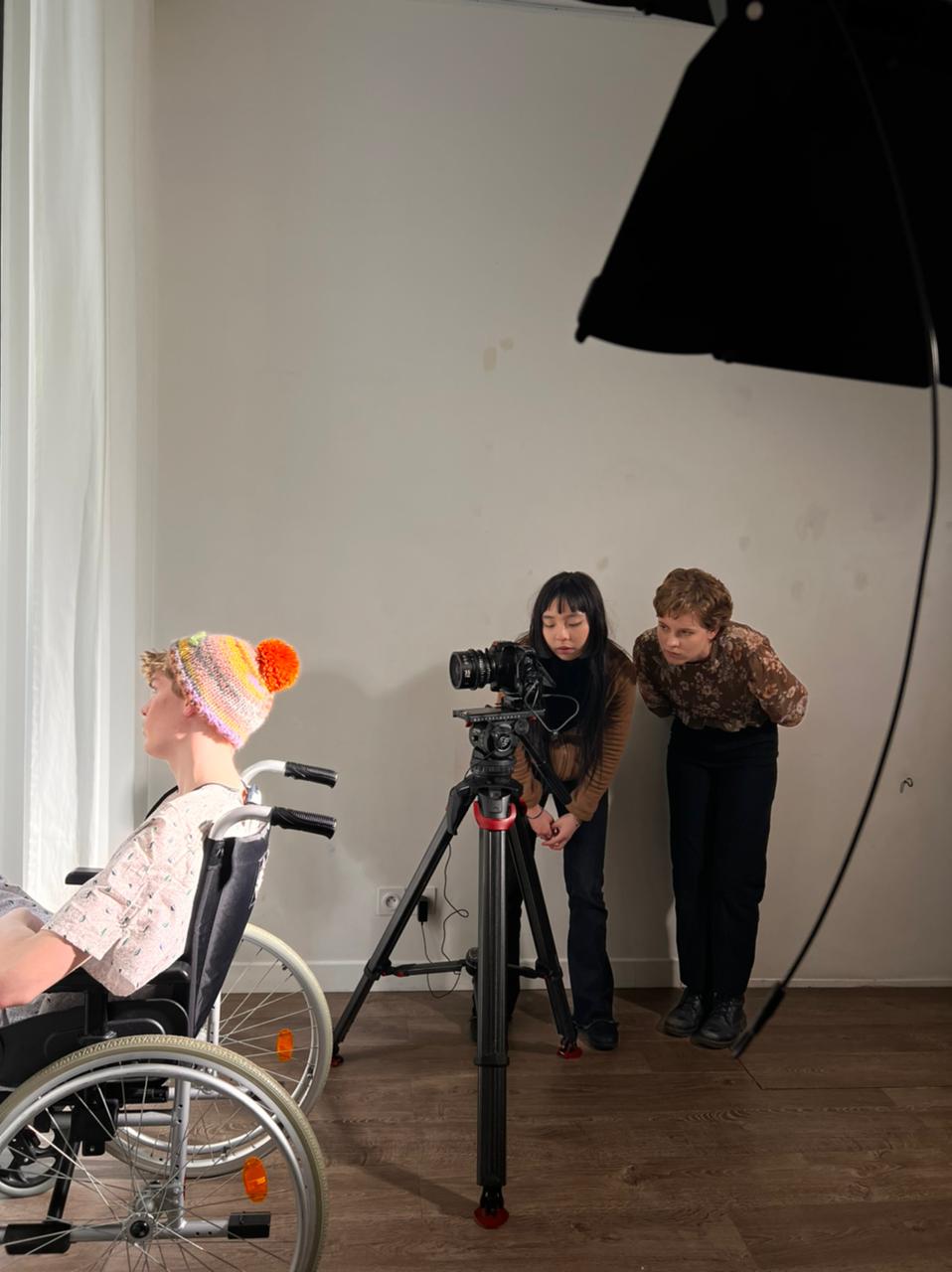
Alumna Spotlight: Dana Koops

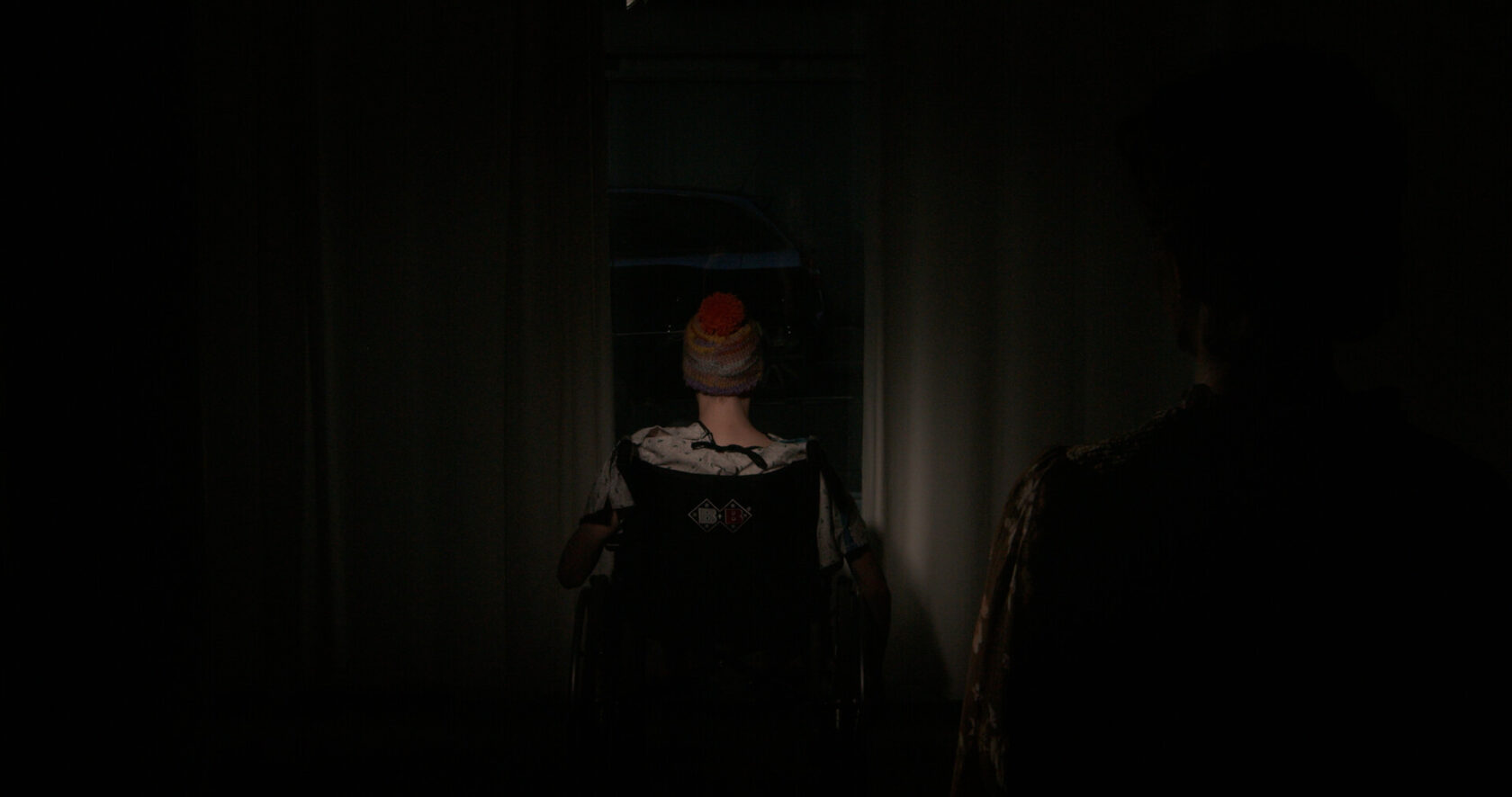
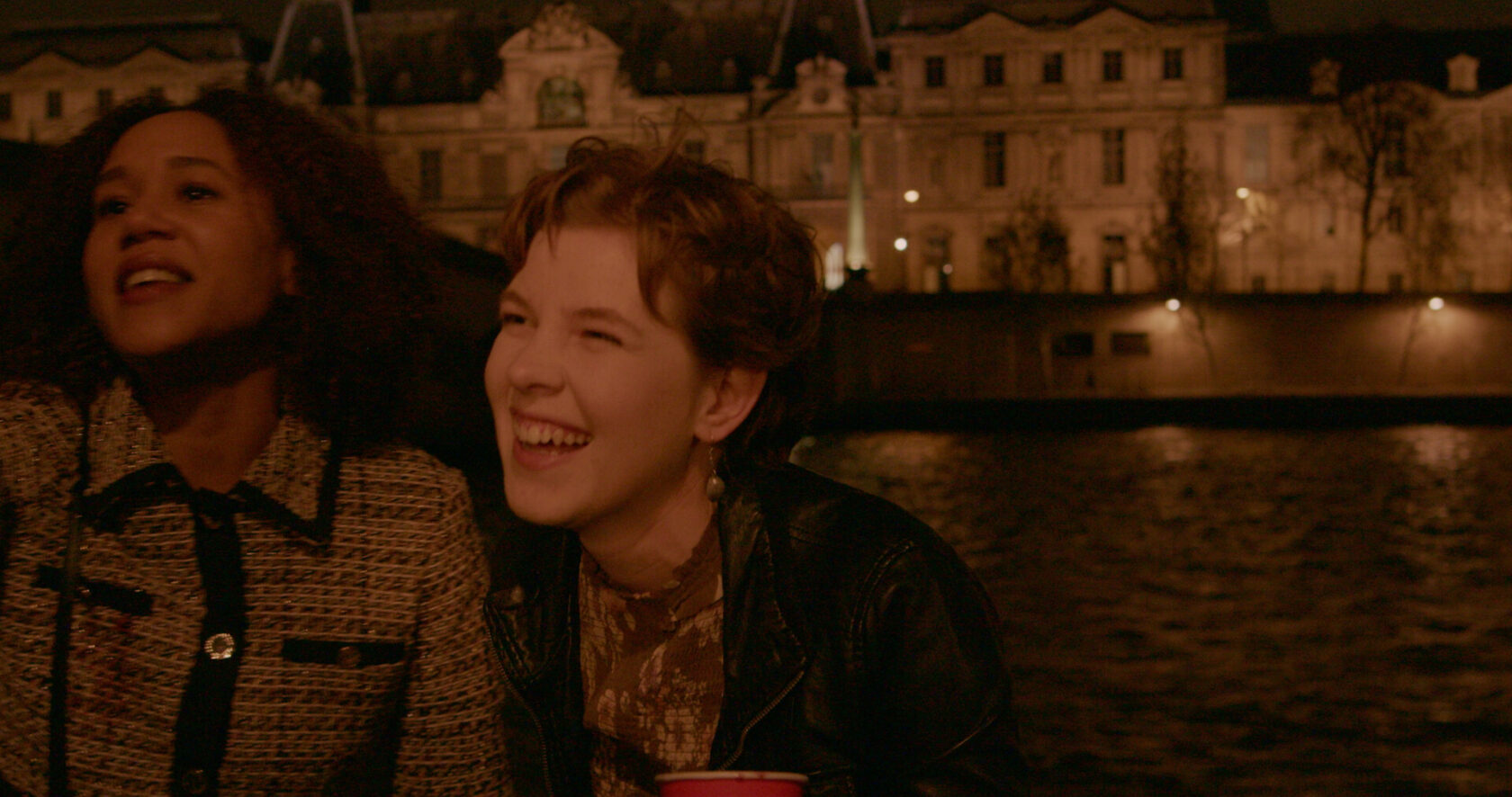
As an actor, script supervisor, and director, Dana Koops has a hand in all aspects of film development. An alumna of the Global BFA dual Emerson College/Paris College of Art Film Art program, Koops produced her film “La Bibliotheque” as an undergraduate thesis project, and premiered it in November 2024 at showcase event L.A. Grown. The film is a poignant exploration of grief, inspired by the loss of her brother in 2022, and explores the question “what if we could FaceTime the afterlife?”
Koops, now based in Los Angeles, attributes her filmmaking development to close bonds with her cohort in the program, and the experience of living and working abroad. “My studies helped teach me a lot more about the technical, nitty gritty details of filmmaking and expanded my knowledge of cinema in different countries and cultures,” she says.
We talked to Koops about ‘La Bibliotheque’, her other works, and how her time in the Global BFA in Film Art program helped to shape her now-blossoming career.
To start, could you present yourself and tell us a bit about your journey into filmmaking? What initially inspired you to pursue a career in film, and how has that passion evolved throughout your time in the Global BFA in Film Art program at Paris College of Art and Emerson College?
My journey as a filmmaker has been a gradual progression. I began as an actor when I was eleven years old. I was initially inspired by the behind-the-scenes of ‘Harry Potter’; I thought that it looked like so much fun I wanted to be a part of it. One day in my acting class, our teacher instructed us all to write a short film and said that we would shoot them as a class. We never ended up doing so, and I was disappointed because I had really enjoyed the writing process and had been looking forward to seeing my story come to life. So I decided to make the film myself. I got one of my acting classmates (Samuel Parker) to collaborate with me – he directed it, I acted in it and we co produced it.
That was my first short film, ‘Stuck’. From there, we went on to make a second short film, ‘Danielle’s Boat’. In making these films, and watching him direct, I began to become interested in directing – and thus made my directing debut with ‘Driver’s Ed’. After directing my next short film, ‘Lift’, I decided to pursue directing wholeheartedly and go to film school. I attended Emerson College/Paris College of Art to get my BFA. My studies helped teach me a lot more about the technical, nitty gritty details of filmmaking and expanded my knowledge of cinema in different countries and cultures. It also opened my eyes to different roles that I hadn’t been as aware of before, such as script supervising. Now, in addition to my passion for acting and directing, I have a passion for script supervising, and am pursuing that as a career.
What drew you to this program, and how did studying in both Paris and Boston shape your approach to filmmaking?
I was drawn to this program by the global aspect of it. I love traveling and so getting to spend time in Boston, Paris, and Kasteel Well (in the Netherlands), was amazing. Studying in these places opened my eyes to different styles of filmmaking and provided a lot of inspiration for new topics to explore. One of my classes was on French cinema, taught in French, and led me to create a silent film noir short where a woman murders her husband after catching him cheating with another lady. It is more abstract than what I normally create, which was fun. So I suppose that my studies shaped my approach to be more artistic with what I create, and to think a bit more out of the box.
What were some of the most memorable experiences or lessons from your time in Paris College of Art and Emerson’s Global BFA program?
Getting to spend the summer in a castle in the Netherlands was pretty memorable as a whole. A specifically wonderful experience was when, at the end of our time there, we threw a ball in the actual ball room that existed there. We all got dressed up in costumes that we found in a little room in the attic and danced the night away.
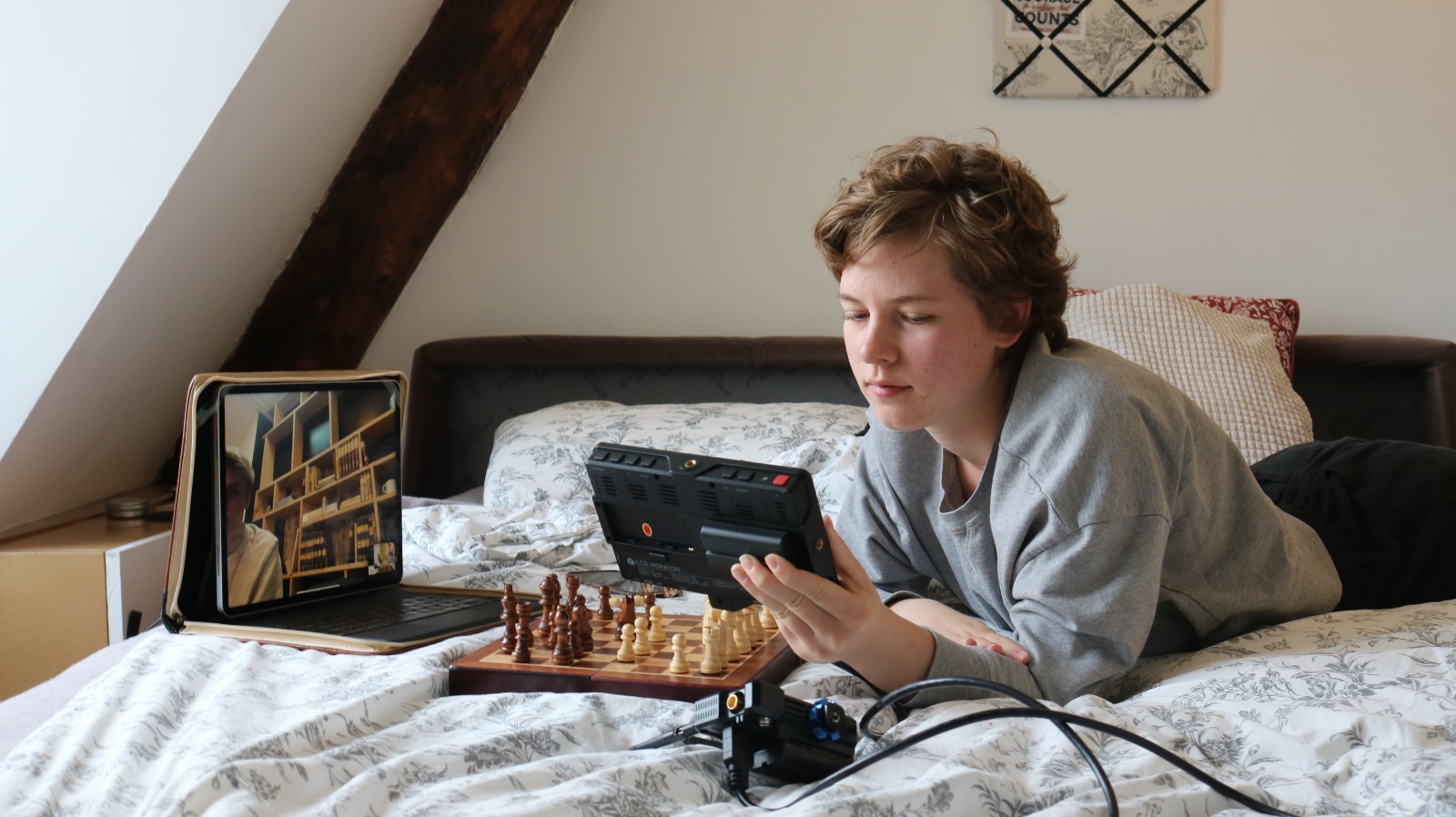
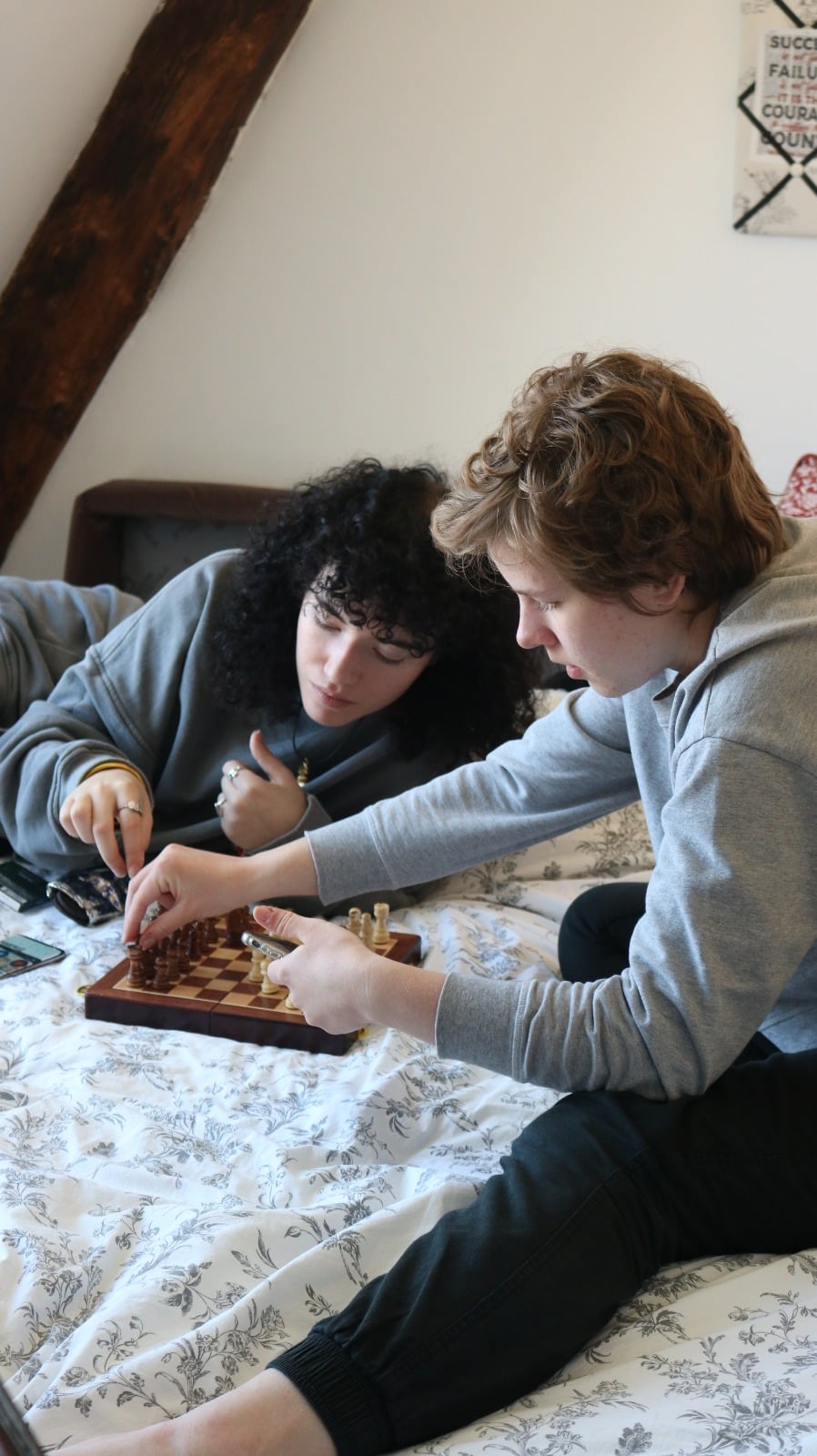
Another fond memory is when in our last week before graduation, we all got together in the common room in Boston and pulled an all-nighter finishing up our final assignments and theses. It was bittersweet because it was one of our last times getting to hang out all together; we were all doing our own thing, but were just enjoying existing together in the same space, supporting each other in our work. Due to the nature of the program, our cohort really became like a family.
Since graduating from the program, you have achieved incredible success, more specifically with your undergraduate thesis film ‘La Bibliotheque’. Can you share what inspired you to create this film, and how did your personal experience shape the story?
I was inspired to create “La Bibliothèque” by my own recent loss of my brother. He had passed away the summer of 2022, and we were given the fall of 2022 to write our thesis scripts. I had wanted to write a comedy, something totally unrelated, but found myself unable to write about anything else. My personal experience shaped the entire premise of my film. I first got the idea when my mother told me about a conversation she’d had with her best friend, where her friend had asked her “what if we could FaceTime the afterlife?” That got me thinking about what my answer to the question would be, so I put the question into Google to see what came up and I discovered this beautiful concept known as “the phones of the wind.” After the 2011 tsunami in Japan, a phone booth was constructed where the phone’s wires weren’t actually plugged into anything, but those who had lost loved ones could go and leave a voicemail for that person, maybe say the goodbye that they hadn’t been able to say. Another phone booth was put up in New York for one of the anniversaries of 9/11. My thesis explores the idea – what if the other person actually picked up?
Losing a loved one is profoundly difficult, and yet you chose to channel that experience into your thesis project. What was the process like for you to write, direct, and act in such a personal piece?
It was definitely a challenging and scary process to create something so personal, especially when it came to putting myself in that place of vulnerability as an actor. To be honest, it was not as therapeutic as one might have expected it to be, I think just because I had so much to focus on that I didn’t really have the time or mental energy to process it on an emotional level.
In the Global BFA program, students collaborate on each other’s thesis films in various roles. Could you share more about this experience and what it was like having your peers involved in a project that was so personally meaningful to you?
We not only got to collaborate on each other’s theses as a cohort, but on each other’s films throughout our entire college experience, which was one of the best parts of the program. It was so special getting to work together and grow together, as people and as filmmakers. We all did various crew positions and got to figure out what we were good at and enjoyed, whether that be assistant directing, editing, gaffing, in my case, script supervising, etc. I was especially thankful to have my peers involved in my thesis project. They were a huge support both emotionally, and practically. Because I was acting in it as well, I wasn’t able to focus as much on the directing, and so I was glad to be able to rely on my crew to handle the more technical side of things. It was scary too, though, to share such an intimate part of myself as my grief.
Your film will soon premiere in Los Angeles at showcase “L.A. Grown.” How does it feel to bring this personal project to an audience in your hometown? What are you hoping people take away from the film?
While one of the coolest parts about the program was living overseas, it was also the most difficult part because of being away from home for so long. I went through the thesis process without my family there for the most part, and so it is so nice to be able to finally bring this project to LA and to get to share it with my family here and experience the screenings and festivals with them by my side. I would hope that people would take away from this film the challenge of learning how to move forward with your grief and to live with it, and that it would touch people.
With “La Bibliotheque” set to be part of the Daniel Koops Award event in honor of your brother, what does this milestone mean to you personally and artistically?
I am so thankful to Dan Bennett, founder/director of the Los Angeles and San Diego International Children’s Film Festivals, for putting together the Daniel Koops Award. Personally, it means a lot to have my brother’s legacy as a film composer live on in this way, and to keep his memory alive like this. He composed almost all the scores for my early films, so it feels fitting to show my thesis, which is inspired by him and marks the end of his life, alongside them. It has come full circle. Artistically, I am happy to be able to be a part of supporting other up and coming composers. Music is such an integral part of film.
Can you talk about the experience of working as a script supervisor in Los Angeles? How has it influenced your approach to filmmaking and your own projects?
I am enjoying working as a script supervisor here in LA, and have been lucky enough to be kept busy with it. There is a strong sense of community between script supervisors here, with a group of us that meet once a month to hang out. Since we are a department of one, I have found that this is instrumental in my growth as a script supervisor. I appreciate how the job involves interacting with all the different department heads, as well as the actors. One gets to see the whole picture of the production, and, conversely, all the specific details that go into it. It also helps me approach my own projects with a better understanding of editing.
You mentioned a desire to return to writing and directing. Are there any stories or themes you’re eager to explore in your future projects?
I have written the pilot episode for a historical fiction limited series that I have in mind, that I would love to work on in the future. It deals with horseback librarians during the Great Depression, with some of its main themes being resilience in the face of hardship and the power that literacy has to change one’s life.
Finally, what advice would you give to other young filmmakers who are considering taking on emotionally charged subjects in their work?
I would advise them to try to build a community around them who will encourage them creatively and emotionally. It can be really draining to put so much of yourself into your work, especially when it comes to emotionally charged subjects, so it is really helpful to have a support system.
Article by Zainab Affejee and Kari Paul